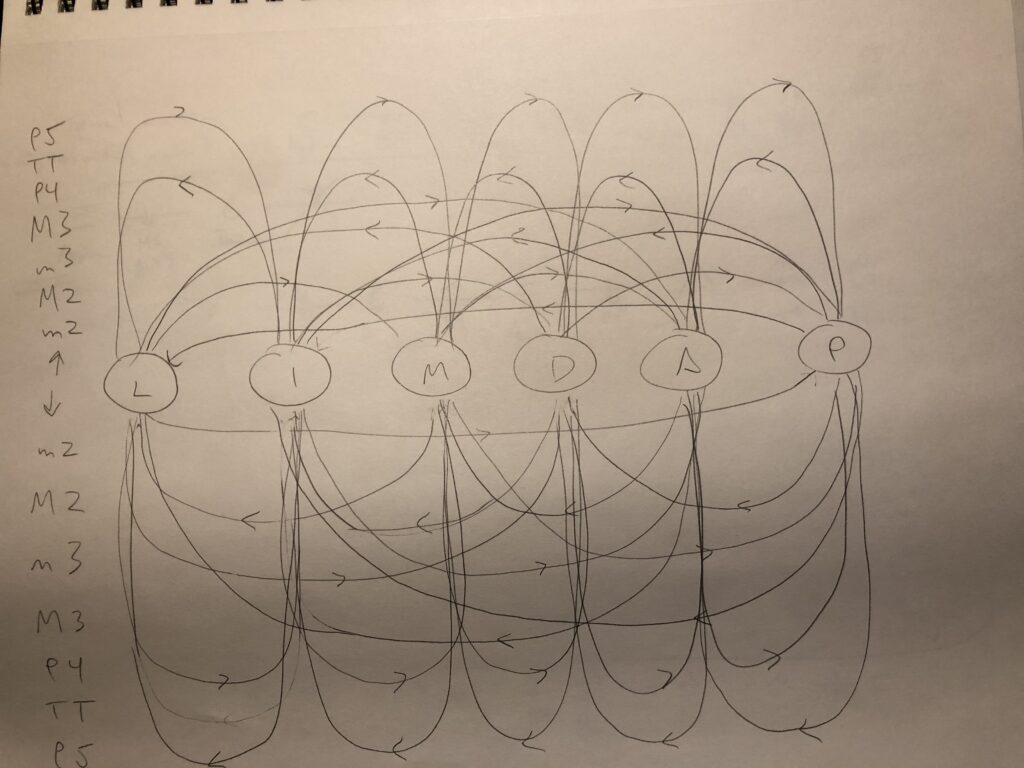
Mode Changing
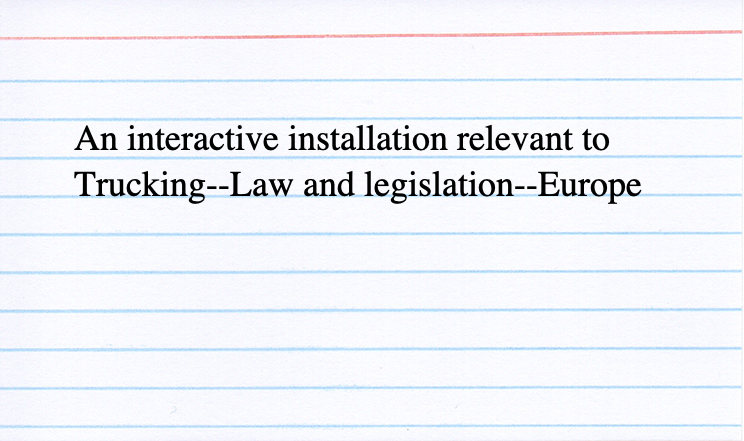 A single-channel video version of my piece A Work of Art for Every Entry in Index—Subjects—Library of Congress is included in the Art as Message exhibit at the Czong Institute for Contemporary Art (CICA) in Gimpo, Korea. The exhibit runs October 7-25.
Other artists featured in the exhibit include Stephen Althouse, Beast, Lauren Bickerdike, Andrea Chinese, Goya Choi, Kt coleman, Dirk Fleischmann, Gregory Grano, Sam HEYDT, Taeho Hong, Holland Hopson, Abdo Julani , kim hayung, Deandra Lee, Daniela Marx, HyeSung Moon, Joohyun Park, Thomas Pickarski, R. Prost, Deborah Sfez, Kim Turru, Mark Wittig, Yeiji Won, Huidi Xiang, Unyon Yang, Jaesik Yoo, Ihsu Yoon, Hyeoung Nae In.
Thanks to an exciting scientific breakthrough, we now have video of slow light from the farthest star. Astronomers everywhere rejoice!
This comes via pianist Edward Forstman’s concert at the 2019 Birmingham New Music festival. Stream the entire concert.
This year’s Birmingham New Music Festival will be a virtual event featuring five concerts streamed online. The series kicks off tonight with a concert by pianist Chris Steele co-presented by the Hoover Library’s Live From My Living Room series.

Craig Hultgren will play the next concert on August 30 at 5:00pm. The concert stream will be at https://youtu.be/TMfXmS_yfAE Craig will perform a piece I wrote for him: Snakeskin (verso) for ecello and live electronics.
Check the festival website for links to the other upcoming concerts.
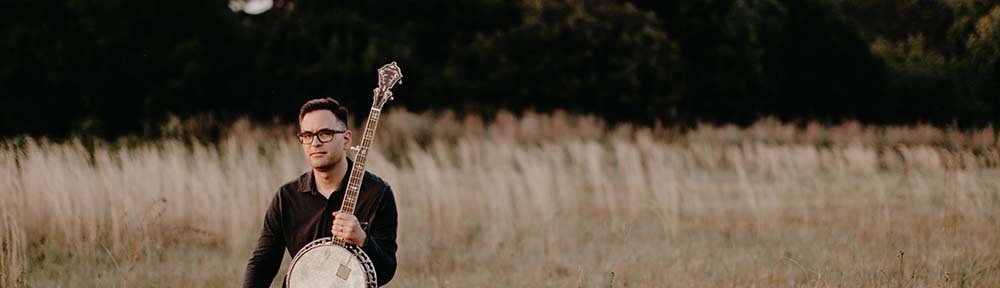
Tune in Thursday August 13 at 7:00pm CST for Live From My Living Room with Holland Hopson presented by the Hoover Library in Hoover, Alabama. I’ll perform new works and improvisations for a custom electric guitar/banjo hybrid instrument built by the amazing Jefferson Pitcher. I may also give a sneak preview of a some visualization software I’ve been developing. Check out the entire Live From My Room video series on YouTube.
The Hoover Library has a long history of presenting great concerts. I played there in person (how quaint!) in 2016, and have had my pieces played there by pianist Aron Kallay and the percussion group Iron Giant. Here’s a video of Iron Giant playing my Quartet 60x880120x208 for four metronomes:
Here’s the info for Thursday’s concert:
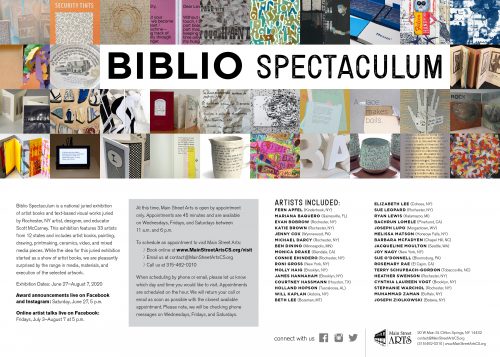
I’m happy to have a piece included in the Biblio Spectaculum exhibit at Main Street Arts in Clifton Springs, NY. The show is a national exhibition of artist books and text-based visual works juried by Scott McCarney. My piece “A Work of Art for Every Entry in Index—Subjects—Library of Congress” uses an algorithm to generate an endless stream of descriptions of possible art objects.
The gallery is open by appointment only, or check out this nice collection of images from the show.
My piece A Work of Art for Every Entry in Index—Subjects—Library of Congress is included in the Automated online exhibit, a part of the Fringe Arts Bath Festival 2020. The exhibit was curated by Samuel Morgan and runs until June 6.
Other artists featured in the exhibit include Anne-Marie Atkinson, Michael Berto, Martin Calvino, Clemence Debaig, Louise Harris, Ryan Lewis, April Lin, Sophia Moffa, Samuel Morgan, Dave Webb, Joseph Wilk, Caro Williams, Liz Wilson, Rachel Yurkovich, and Emily Joy Zeller.
I’ll be performing tonight at 6pm via Zoom on a Dispersion Relation X event sponsored by Doug Van Nort’s Dispersion Lab. Also on the bill are
Here’s the Facebook Event page